Introduction
Some people say the deltoid muscle is one of the best sites for intramuscular injections. It is easily accessible, well-suited for vaccinations, and allows relatively rapid medication absorption. In busy clinical settings, it often becomes the default choice.
This article introduces the deltoid muscle site for injection in a clear and practical way. It explains the relevant anatomy, demonstrates how to accurately locate the correct injection area, and outlines proper intramuscular injection technique.
Where Is the Deltoid Muscle Site for Injection?
.jpg?w=650&h=488)
The deltoid muscle is located on the outer aspect of the upper arm and forms the rounded contour of the shoulder. It originates from the lateral third of the clavicle, the acromion, and the spine of the scapula, and inserts into the deltoid tuberosity of the humerus.
For injection purposes, the most relevant portion is the thick, central part of the muscle on the lateral upper arm. This area provides sufficient muscle mass in most adults and is separated from major neurovascular structures when proper landmarking is used.
Because the deltoid is superficial and easily accessible, it is commonly selected for vaccinations and small-volume intramuscular medications. Its location allows patients to remain seated comfortably during administration.
Anatomy of the Deltoid Muscle Site
The deltoid is a multipennate muscle designed for strength and stability of the shoulder joint. Its three fiber groups — anterior, middle, and posterior — converge toward a single insertion point on the humerus, creating a thick muscular mass in the central region. This structural arrangement provides adequate depth for intramuscular medication delivery when properly identified.
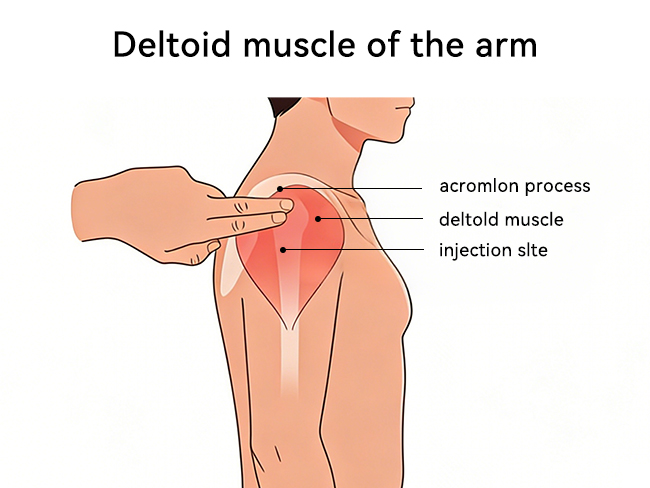
From a clinical perspective, the relationship between the deltoid muscle and surrounding tissues is especially important. The muscle lies superficial to the humerus and is covered only by skin and subcutaneous tissue, which allows direct access with a perpendicular needle insertion. However, deeper and inferior to the muscle course important neurovascular structures such as the Axillary nerve and the Radial nerve.
This layered anatomy explains why correct injection depth and site selection are critical. The goal is to deposit medication within the muscle tissue while avoiding deeper structures.
How to Locate the Deltoid Injection Site for Injection: Training Tips
Accurate landmarking of the deltoid injection site is a skill that improves with deliberate practice. While the general rule of measuring 2–3 fingerbreadths below the acromion provides a starting point, effective training focuses on consistency, tactile awareness, and anatomical confirmation rather than memorization alone.
Tip 1: Train Your Palpation
Before practicing needle insertion, learners should focus on confidently identifying the acromion through palpation. Repeatedly locating this bony landmark on different body types improves tactile recognition.
Tip 2: Standardize Finger Placement
When measuring 2–3 fingerbreadths, fingers should be placed horizontally below the acromion, not vertically.
Tip 3: Practice Assessing Muscle Thickness
Learners should be trained to gently palpate the lateral upper arm to assess muscle mass before selecting the injection point. This reinforces clinical judgment and helps determine whether the deltoid is appropriate for injection.
Tip 4: Use Repetition with Feedback
Training is most effective when repeated landmarking practice is combined with instructor feedback or visual confirmation. Simulation models or supervised sessions allow learners to correct errors before performing injections in clinical settings.
Proper IM Injection Technique in the Deltoid
Once the correct deltoid injection site has been identified, proper technique ensures that the medication is delivered effectively into the muscle tissue. Training should emphasize controlled movements, consistent needle angle, and awareness of tissue depth.
1. Patient Positioning
The patient should be seated comfortably with the arm relaxed at the side. Tension in the shoulder can make the muscle feel firmer and may increase discomfort during injection.
2. Needle Angle and Insertion
For intramuscular injections in the deltoid, the needle should be inserted at a 90-degree angle to the skin surface. This perpendicular approach helps ensure the medication reaches the muscle rather than remaining in subcutaneous tissue.
3. Injection Depth and Volume
Appropriate needle length should be selected based on the patient’s body composition to ensure adequate muscle penetration. In adults, the deltoid is typically used for small-volume injections, generally up to 2 mL.
4. Post-Injection Care
After withdrawing the needle, apply gentle pressure with sterile gauze. Avoid excessive massage unless clinically indicated.
Common Mistakes and Potential Complications
Even when the deltoid muscle is selected appropriately, technical errors or poor landmarking can reduce injection effectiveness and increase the risk of complications.
1. Injecting Too High
Placing the injection too close to the acromion increases the risk of shoulder pain and joint-related injury. The safe injection zone is located below the acromion within the central, thickest portion of the muscle.
2. Injecting Too Low or Too Medial
Incorrect placement lower or toward the medial arm may reduce muscle penetration and increase the likelihood of ineffective medication delivery.
3. Inadequate Needle Length
Using a needle that is too short may result in subcutaneous injection instead of intramuscular delivery. Conversely, excessively long needles may increase discomfort.
4. Poor Muscle Relaxation
Injecting into a tense deltoid can increase pain and resistance during insertion.
Potential Complications
When performed correctly, deltoid intramuscular injections are generally safe. However, inaccurate landmarking or improper technique can lead to local pain, swelling, or bruising, and in rare cases, nerve irritation. Awareness of these risks helps practitioners take preventive measures during training and clinical practice.
Maintaining proper patient positioning, selecting an appropriate needle length, and confirming the correct injection site are key steps in minimizing potential complications. Practitioners who incorporate these checks into routine practice can increase both safety and patient comfort.
Who Is Suitable and Not Suitable for Deltoid Injections
The deltoid muscle site for injection is generally suitable for older children, adolescents, and adults who have adequate upper arm muscle mass. In some clinical practices, even infants as young as 1–2 months may receive vaccines in the deltoid when the muscle is sufficiently developed and the dose is small.
Deltoid injection is generally not recommended when the muscle is too thin to safely accommodate the needle, when larger injection volumes are required (>2 mL), or when the injection site has local injury, infection, or inflammation. In such cases, alternative sites like the vastus lateralis or ventrogluteal are preferred.
Deltoid vs Other IM Injection Sites
Different intramuscular injection sites have specific advantages depending on patient age, muscle development, and injection volume. The table below summarizes their typical applications:
| Muscle | Location | Typical Use | Patient Population | Notes |
| Deltoid | Upper outer arm, below the acromion | Small-volume injections (≤2 mL), vaccinations | Older children, adolescents, adults; infants | Easily accessible, superficial, patient can remain seated |
| Ventrogluteal | Lateral hip, between iliac crest and greater trochanter | Moderate to large-volume injections | Adults and adolescents | Thick muscle mass, away from major nerves |
| Dorsogluteal | Upper outer quadrant of the buttock | Historically used for larger injections | Adults | Higher risk of sciatic nerve injury; less preferred today |
| Vastus Lateralis | Lateral thigh, middle third of thigh | Vaccines, moderate-volume injections | Infants, toddlers, patients with thin deltoid | Often preferred for infants <12 months; muscle is well-developed in thigh |
Practical Training Advice
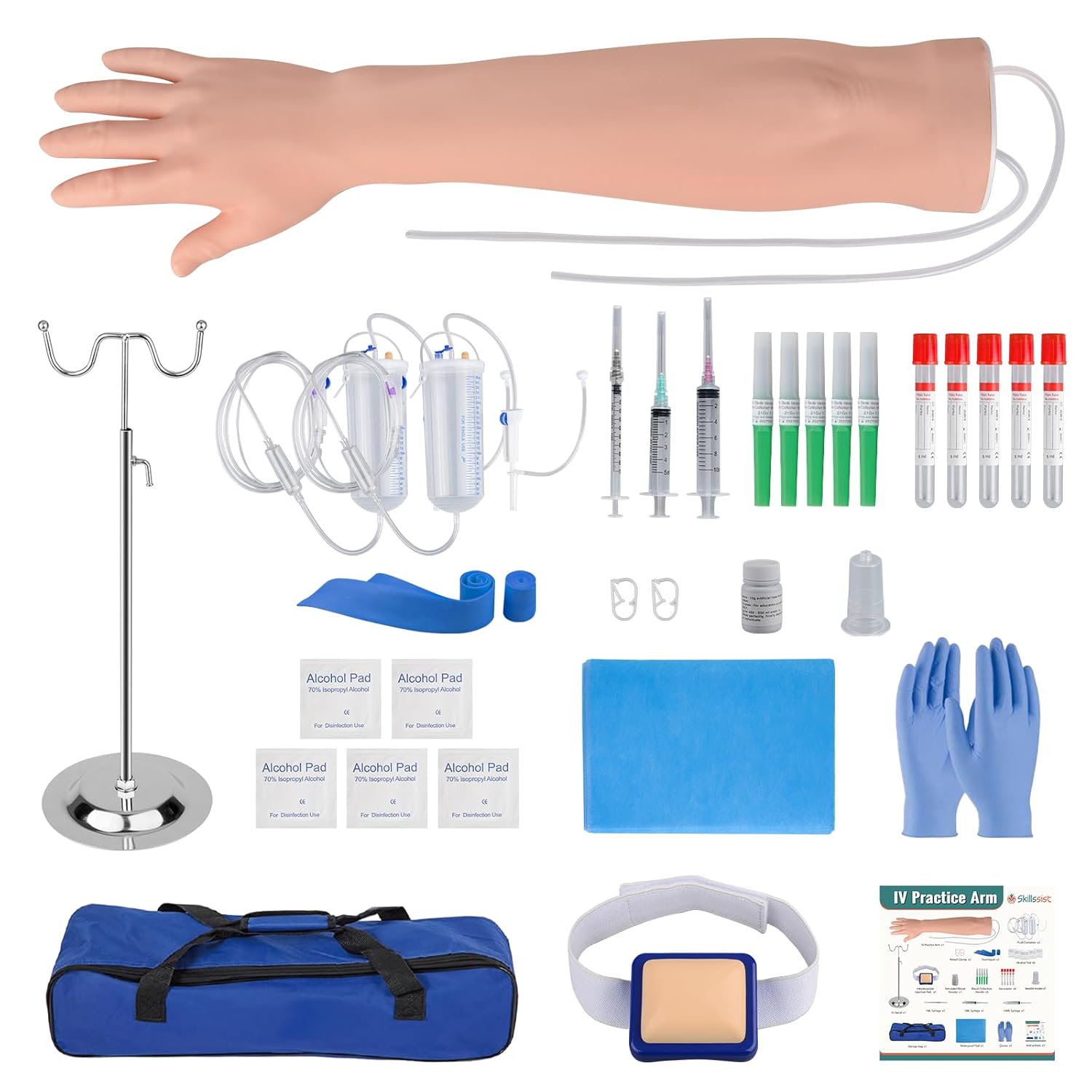
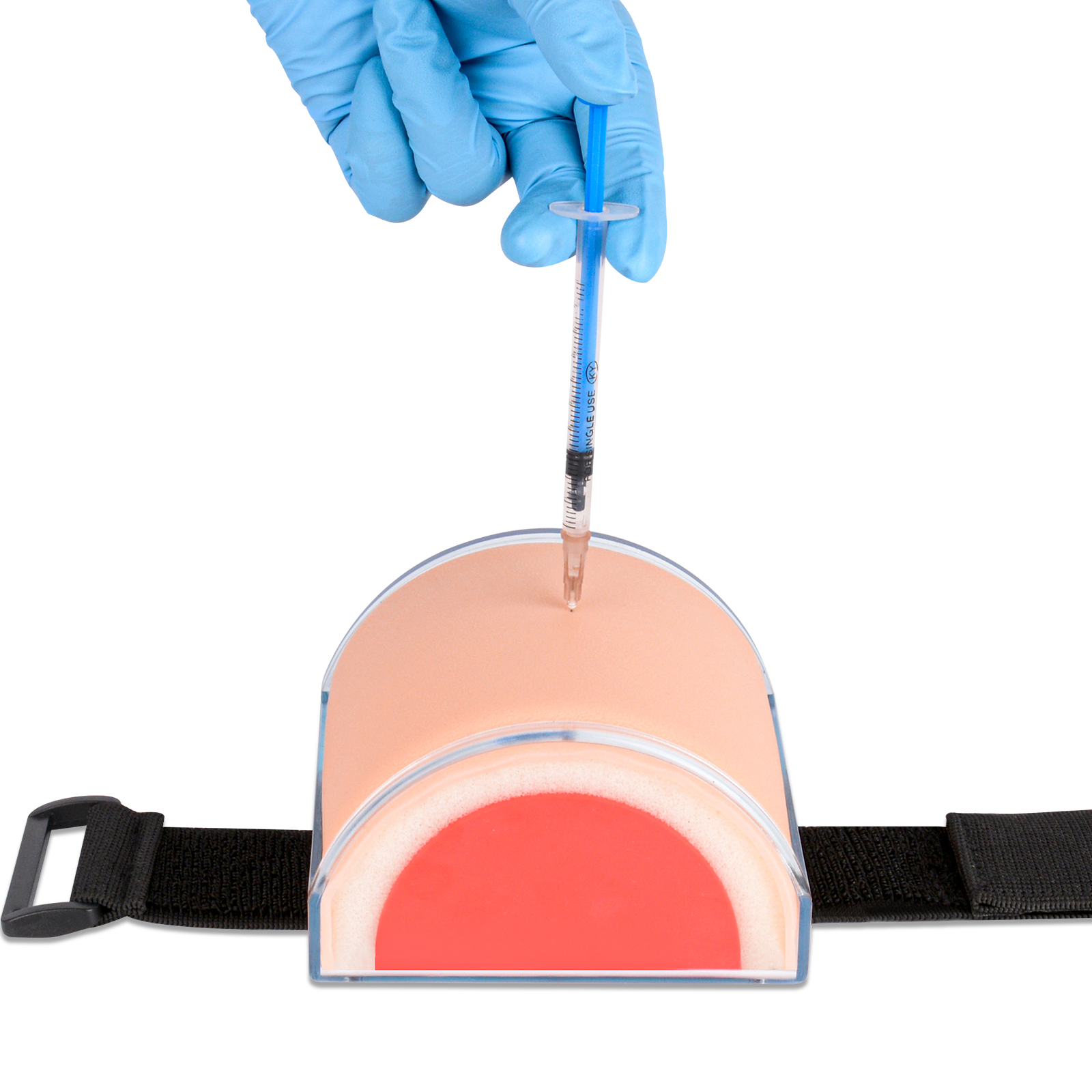
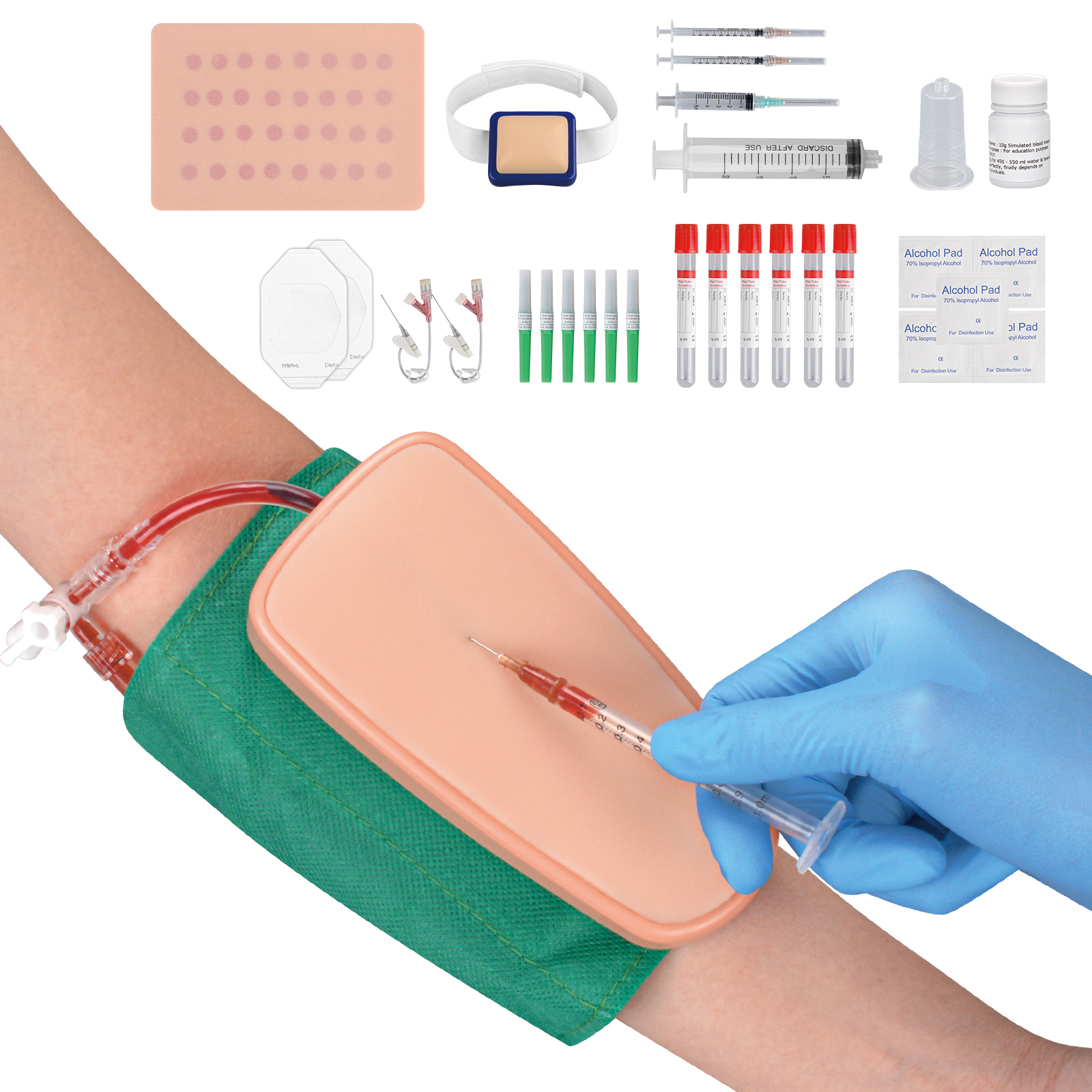
“Rome wasn’t built in a day.” No one can master deltoid intramuscular injections on their first try. Repeated hands-on practice with medical training models is essential to learn the correct technique. Using medical training manikins or dedicated IM injection pads allows learners to simulate patients of different ages, muscle sizes, and body types. Practicing in this way builds confidence and helps ensure injections are safe and accurate in real clinical situations.
Conclusion
By reading this article, you now have a clearer understanding of the deltoid muscle site for injection and the steps needed to practice safely. Whether you are a student, a trainee, or a healthcare professional, you can use this knowledge to guide your hands-on training and build confidence in performing intramuscular injections. Remember, proficiency comes from repeated practice and attention to detail, so take advantage of medical training manikins or IM injection pads to refine your skills before working with real patients.