
Nursing education today faces a persistent challenge: students must develop clinical competence without always having access to real patients. In many nursing schools, clinical placements are limited, and patient safety concerns restrict hands-on practice opportunities.
As a result, students may understand theoretical concepts but still lack confidence when performing real procedures.
This is where the nursing simulation manikin plays a critical role. By providing a safe and realistic training environment, simulation-based learning helps bridge the gap between classroom theory and clinical practice in modern nursing education.
Why Traditional Teaching Methods Are Not Enough
Traditional nursing education often relies on lectures, demonstrations, and limited clinical exposure. While these methods are important, they are not sufficient on their own.
Students typically face three key limitations:
- Limited opportunities for repeated hands-on practice
- High pressure in real clinical environments
- Inconsistent patient cases during training
This creates a gap between “knowing” and “doing.” Students may understand procedures intellectually but struggle to perform them confidently in real situations.
To address this gap, many institutions are adopting clinical skills training supported by simulation-based learning tools.
How Simulation Manikins Improve Clinical Skills Training
A nursing simulation manikin allows students to practice essential clinical procedures in a controlled and repeatable environment. This transforms learning from passive observation into active skill development.
1. Safe and Controlled Learning Environment
Simulation manikins allow students to practice procedures without risk to real patients. This reduces anxiety and encourages learners to focus on technique rather than fear of making mistakes.
2. Repetition Builds Clinical Confidence
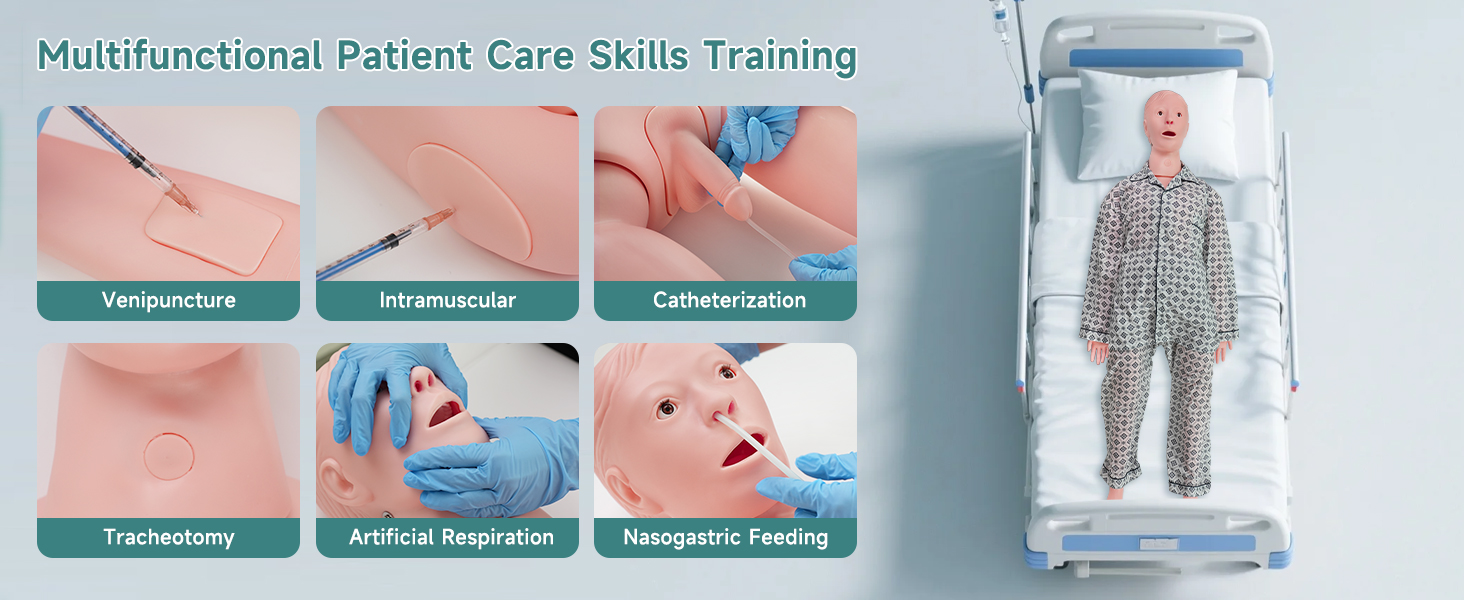
One of the most important aspects of skill development is repetition. With simulation training, students can repeat procedures such as injections, catheterization, and wound care until they achieve proficiency.
3. Standardized Learning Experience
In traditional clinical settings, student experiences can vary widely depending on patient availability. Simulation ensures every student is exposed to the same scenarios, making assessment more fair and consistent.
4. Faster Skill Development
By practicing repeatedly in a structured environment, students develop muscle memory and improve procedural speed, leading to faster transition into real clinical settings.
These advantages make simulation training in nursing a core component of modern healthcare education.
Practical Use of Simulation Manikins in Nursing Skills Labs
In real nursing schools and training centers, simulation manikins are widely used in structured skills labs.
Common training applications include:
- Injection and Medication Administration
- Students practice IV, IM, and subcutaneous injections in a safe environment before working with real patients.
- Wound Care and Dressing Techniques
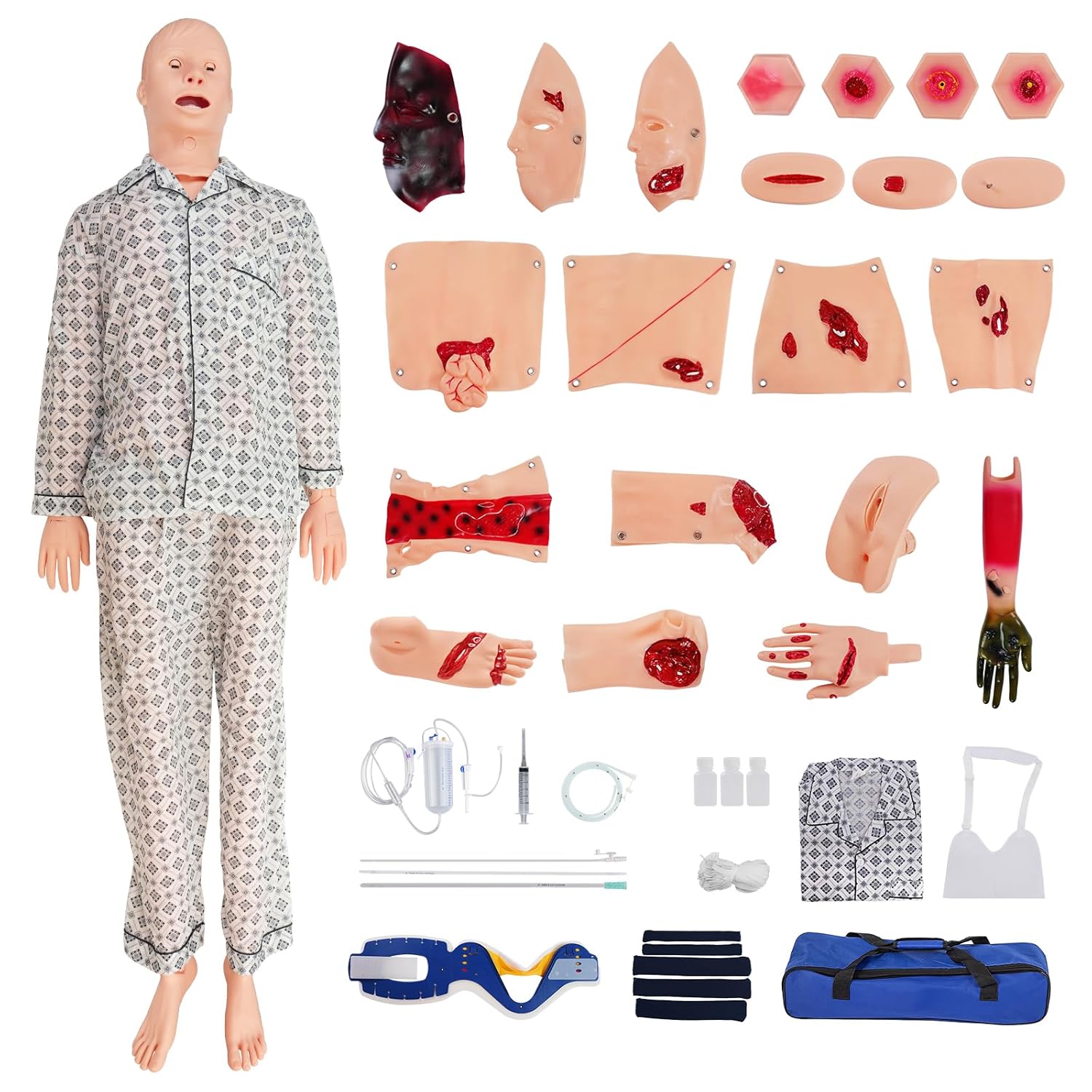
- Simulation models help learners understand infection control, wound assessment, and dressing procedures.
- Emergency Response Training
- Manikins are used for CPR practice, airway management, and choking response simulations.
- Basic Patient Care Skills
- Training includes hygiene care, patient positioning, and vital signs monitoring.
These hands-on exercises are essential for developing real-world competence in nursing student training programs.
How Educators Can Maximize Training Effectiveness
The effectiveness of simulation-based education depends not only on equipment, but also on teaching strategy.
Nursing educators can improve outcomes by:
- Structuring training in progressive levels (beginner → advanced)
- Using scenario-based learning for real clinical situations
- Encouraging group-based simulation exercises
- Integrating objective evaluation systems such as OSCE assessments
By combining these strategies with a nursing simulation dummies, educators can significantly enhance the quality of clinical simulation training.
Benefits for Students and Nursing Institutions
The adoption of simulation-based training provides measurable benefits for both learners and institutions.
For Students
- Increased confidence in performing procedures
- Improved clinical decision-making skills
- Reduced anxiety during hospital placements
- Better preparation for real patient care
For Nursing Schools and Training Centers
- More consistent teaching outcomes
- Improved examination performance (including OSCE results)
- Enhanced reputation for clinical education quality
- Safer and more efficient training environment
Overall, simulation-based learning strengthens the entire nursing education system.
The Future of Nursing Education
As healthcare systems evolve, competency-based education is becoming the global standard. Nursing programs are increasingly expected to ensure that graduates are clinically prepared from day one.
In this context, the nursing simulation manikin is no longer optional—it is an essential teaching tool.
Simulation-based learning supports modern educational goals by integrating theory, practice, and evaluation into a unified training approach. It ensures students are not only knowledgeable, but also clinically competent and confident.
Conclusion
Improving nursing education requires more than textbooks and lectures. It requires structured, hands-on, and repeatable practice opportunities that prepare students for real clinical environments.
By integrating simulation manikins into clinical skills training, nursing schools can significantly enhance learning outcomes, improve student confidence, and raise overall educational quality.
For institutions seeking the most realistic and versatile training tools, Skillssist’s full body nursing mannequins offer comprehensive simulation solutions. These mannequins allow students to practice a wide range of procedures—from injections and wound care to emergency response—in a safe, repeatable, and clinically accurate environment, ensuring graduates are fully prepared for real-world nursing challenges.