
IV injection and suture skills are two fundamental clinical skills that every medical and nursing student needs to develop. From administering medications through intravenous access to closing wounds through suturing, these procedures play an important role in daily healthcare practice. For beginners, repeated hands-on practice is the key to improving accuracy, confidence, and clinical performance.
Why Are IV Injection and Suture Skills Important?
IV injection and suture skills are two fundamental clinical skills that every medical and nursing student needs to develop. They are like the foundation of a building — without a strong foundation, it is difficult to provide safe and effective patient care. These procedures are commonly performed in hospitals, clinics, and emergency care settings, and they require not only theoretical knowledge but also practical experience, hand coordination, and precise movements.
IV Injection Skills: A Key Skill for Patient Care
Intravenous (IV) injection is one of the most common procedures performed in hospitals and clinics. It allows healthcare professionals to deliver medications, fluids, and other treatments directly into a patient’s bloodstream for faster and more effective results.
In clinical settings, IV access is commonly needed for:
- Emergency care: Providing rapid medication or fluid therapy for patients in critical conditions, such as dehydration, severe infection, or trauma.
- Medication administration: Delivering antibiotics, pain management medications, chemotherapy drugs, and other treatments that require intravenous delivery.
- Fluid replacement: Restoring hydration and electrolyte balance in patients who cannot take sufficient fluids orally.
For medical and nursing students, developing proper IV injection skills is essential because incorrect techniques may cause discomfort, failed insertion, bruising, or complications. Through repeated practice, students can improve their ability to locate veins, control needle angles, and perform procedures with greater confidence.
Suture Skills: Essential for Wound Management
Suturing is another important clinical skill used to close wounds and support the healing process. Healthcare professionals, especially those working in emergency medicine, surgery, and wound care, need to understand how to properly handle instruments, control needle movement, and create secure wound closures.
In real clinical situations, suturing may be required for:
- Emergency wound treatment: Closing cuts and injuries caused by accidents or trauma.
- Post-surgical care: Supporting wound closure after surgical procedures.
- Minor clinical procedures: Managing wounds in outpatient clinics and healthcare facilities.
Proper suturing techniques help reduce the risk of wound separation, infection, and poor healing outcomes. For beginners, developing skills such as stitch placement, spacing, tension control, and knot tying requires consistent hands-on practice.
How Beginners Practice IV Injection and Suture Skills?
For beginners, developing IV injection and suture skills is not about memorizing the procedure steps alone. These clinical skills require proper techniques, hand coordination, and repeated practice to build confidence and accuracy. A structured learning process helps students gradually move from understanding the theory to performing procedures in real clinical environments.
1. Learn the Basic Knowledge Before Hands-On Practice
Before starting practical training, beginners should first understand the purpose, procedure steps, and safety requirements of each skill.
For IV injection practice, students should learn:
- Basic vein anatomy and common injection sites
- The correct needle insertion angle and technique
- Proper hand positioning and catheter control
- Sterile procedures to reduce the risk of infection
For suture practice, beginners need to understand:
- Different types of suturing techniques
- How to handle needles and surgical instruments
- Proper stitch placement and spacing
- Knot tying methods and tension control
A good understanding of the fundamentals helps students perform each step correctly and avoid developing incorrect habits.
2. Start with Repeated Practice in a Safe Environment
Clinical skills require hands-on experience. For beginners, repeated practice is essential because it helps develop muscle memory and improve confidence.
During early training, students should focus on:
- Maintaining stable hand movements
- Following the correct sequence of procedures
- Improving precision and consistency
- Learning from mistakes and making adjustments
Unlike theoretical learning, practical training allows students to experience the movements involved in real procedures and gradually become more comfortable.
3. Practice with Simulation-Based Training
Before performing IV injections or suturing on real patients, many medical and nursing students begin with simulation training. A realistic practice environment allows beginners to develop essential techniques safely and gain confidence before entering clinical settings.
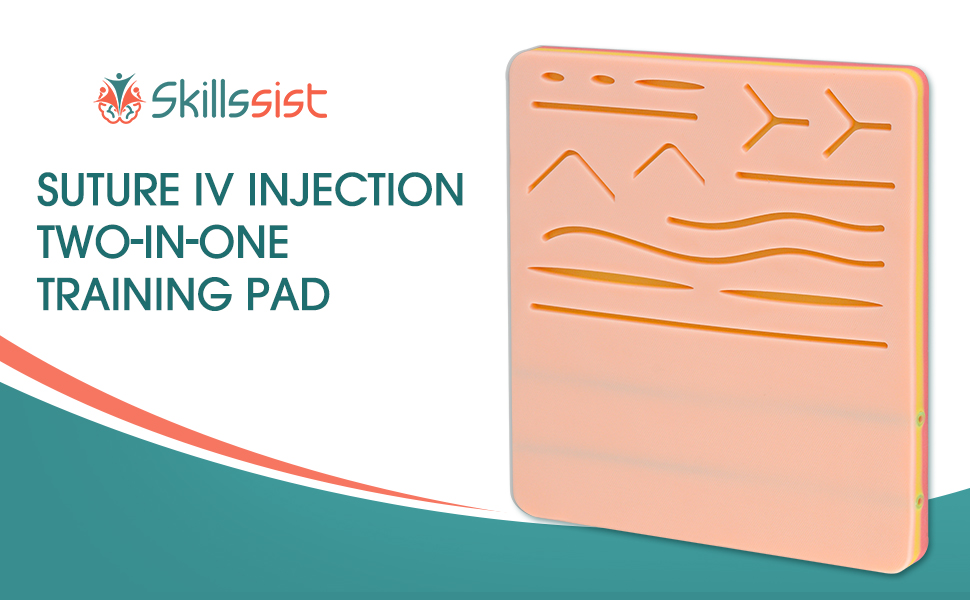
An IV Injection & Suturing Practice Pad provides a practical training solution that allows students to practice both IV injection and wound suturing skills in one model. By simulating real procedural experiences, it helps beginners:
- Practice procedures repeatedly without patient risk
- Develop proper hand-eye coordination and procedural accuracy
- Experience realistic skin resistance and feedback during practice
- Build confidence before performing procedures on real patients
Simulation training serves as a bridge between classroom learning and real patient care, helping students transform theoretical knowledge into practical clinical skills.
4. Improve Skills Through Feedback and Continuous Practice
Even after learning the basic techniques, beginners need guidance and feedback to improve their performance.
Instructors can help students identify areas for improvement, such as:
For IV injection:
- Needle insertion angle
- Hand stability
- Injection accuracy
- Proper procedure sequence
For suture skills:
- Needle control
- Stitch consistency
- Knot security
- Appropriate tension on the wound
With continuous practice and professional feedback, beginners can gradually develop the confidence and technical ability needed for clinical procedures.
Summary
IV injection and suture skills are essential clinical skills that every medical and nursing student needs to develop. While theoretical knowledge provides the foundation, hands-on practice is the key to improving accuracy, confidence, and clinical performance. Through structured learning, repeated practice, and effective feedback, beginners can gradually master these techniques and better prepare themselves for real-world patient care.