

If you're new to tattooing, you might wonder where to start and what to practice first. Learning how to practice tattooing begins with basic drawing and line control, followed by hands-on exercises using a tattoo machine and synthetic practice skin. This guide covers the essential skills, step-by-step exercises, and tools beginners need to get started.
How to Start Practicing Tattooing With No Experience?
If you've never used a tattoo machine before, don't rush into complicated designs. Start by developing the basic skills every tattoo artist needs: drawing, hand control, equipment handling, and safe working habits.
Step 1: Start With Drawing
Drawing is the easiest and most affordable way to begin tattoo practice. All you need is a pencil, paper, and a few simple designs.
Start with straight lines, circles, curves, and geometric shapes. Once you're comfortable with these, try small flowers, stars, letters, or other simple tattoo designs. Focus on keeping your lines smooth, shapes balanced, and spacing consistent.
Step 2: Get Familiar With a Tattoo Machine
Before using a tattoo machine, learn about its components, compatible needle cartridges, power supply, and basic operation. Rotary pen-style machines are commonly used for tattoo training, but the best choice depends on your needs and available instruction.
Begin by practicing your grip and hand movements with the machine switched off. When moving to powered practice on synthetic skin, follow the manufacturer's instructions and seek guidance from an experienced tattoo professional.
Learn safe needle handling, cross-contamination prevention, and proper sharps disposal before working with tattoo needles.
Step 3: Start Practicing on Fake Skin
Once you're comfortable with basic drawing and equipment handling, move on to synthetic tattoo practice skin.
Start with a flat practice pad and simple designs, such as straight lines, circles, and geometric patterns. Focus on following the stencil accurately and maintaining steady movements rather than completing complicated artwork.
Fake skin allows you to practice foundational techniques without tattooing a person, although it doesn't reproduce all the characteristics of living skin.
How to Practice Tattooing on Fake Skin?
Practicing on synthetic skin is one of the best ways for beginners to develop basic tattooing skills without working on real skin. If you're learning how to practice tattooing on fake skin, start with simple exercises and gradually move on to more detailed designs.
Before you begin, prepare a clean, stable workspace and secure your tattoo practice skin on a flat surface. Choose a simple design and transfer it using tattoo stencil paper and a compatible transfer product. Allow the stencil to set before starting. Always follow your equipment's instructions and safe needle-handling practices.
Exercise 1: Practice Straight Lines
Straight lines are the foundation of good tattoo linework. Start by drawing or transferring several parallel lines onto your practice skin. Follow each line with your tattoo machine, focusing on steady movements and consistent line thickness. Repeat with horizontal, vertical, and diagonal lines to improve your control.
Exercise 2: Practice Circles and Curves
Once you're comfortable with straight lines, move on to circles, waves, and spirals. These shapes help you practice changing direction while maintaining smooth, continuous movements. Start with larger shapes before attempting smaller, tighter curves.
Exercise 3: Practice Basic Shading
After developing basic line control, begin tattoo shading practice with simple shapes such as circles or squares. Try creating smooth transitions from darker to lighter areas, paying attention to even coverage and gradual changes in tone. Practice on synthetic skin before attempting more detailed shading patterns.
Exercise 4: Practice Lettering and Simple Symbols
Choose short words, initials, stars, hearts, or other simple symbols. Transfer the design onto your practice skin and follow the outlines carefully. Focus on letter spacing, proportions, and line accuracy. Start with larger designs before moving on to smaller or more intricate lettering.
Exercise 5: Complete a Simple Tattoo Design
Once you're comfortable with individual exercises, combine your skills in a small design, such as a flower, leaf, butterfly, or geometric pattern. Practice outlining and adding basic shading, then compare your finished work with the original stencil to identify areas for improvement.
As your skills improve, you can also try practicing on curved surfaces. A silicone tattoo practice hand allows you to work around fingers, knuckles, and the back of the hand, helping you become familiar with different working angles and surface contours.
Remember that synthetic skin doesn't behave exactly like human skin. These tattoo practice exercises help build foundational skills, but they don't replace professional training or supervised experience.
What Tools Do You Need to Practice Tattooing?

You don't need to buy every professional tattoo tool when you're just starting out. However, having the right tattoo practice tools can make your training more organized and effective.
| Tattoo Practice Tool | Main Purpose |
| Sketchbook and pencils | Drawing and design practice |
| Tattoo machine | Machine handling and control |
| Compatible needle cartridges | Practice on synthetic materials |
| Tattoo practice skin | Linework, shading, and complete designs |
| Tattoo stencil paper | Transferring designs onto practice surfaces |
| Tattoo practice hand | Practicing on curved surfaces |
| Practice ink | Working with compatible synthetic skin |
| Gloves and safety supplies | Safe equipment handling and disposal |
Choosing the Right Tattoo Practice Skin
A flat tattoo practice skin pad is a practical starting point for beginners. It provides space to repeat linework, shading, and stencil exercises.
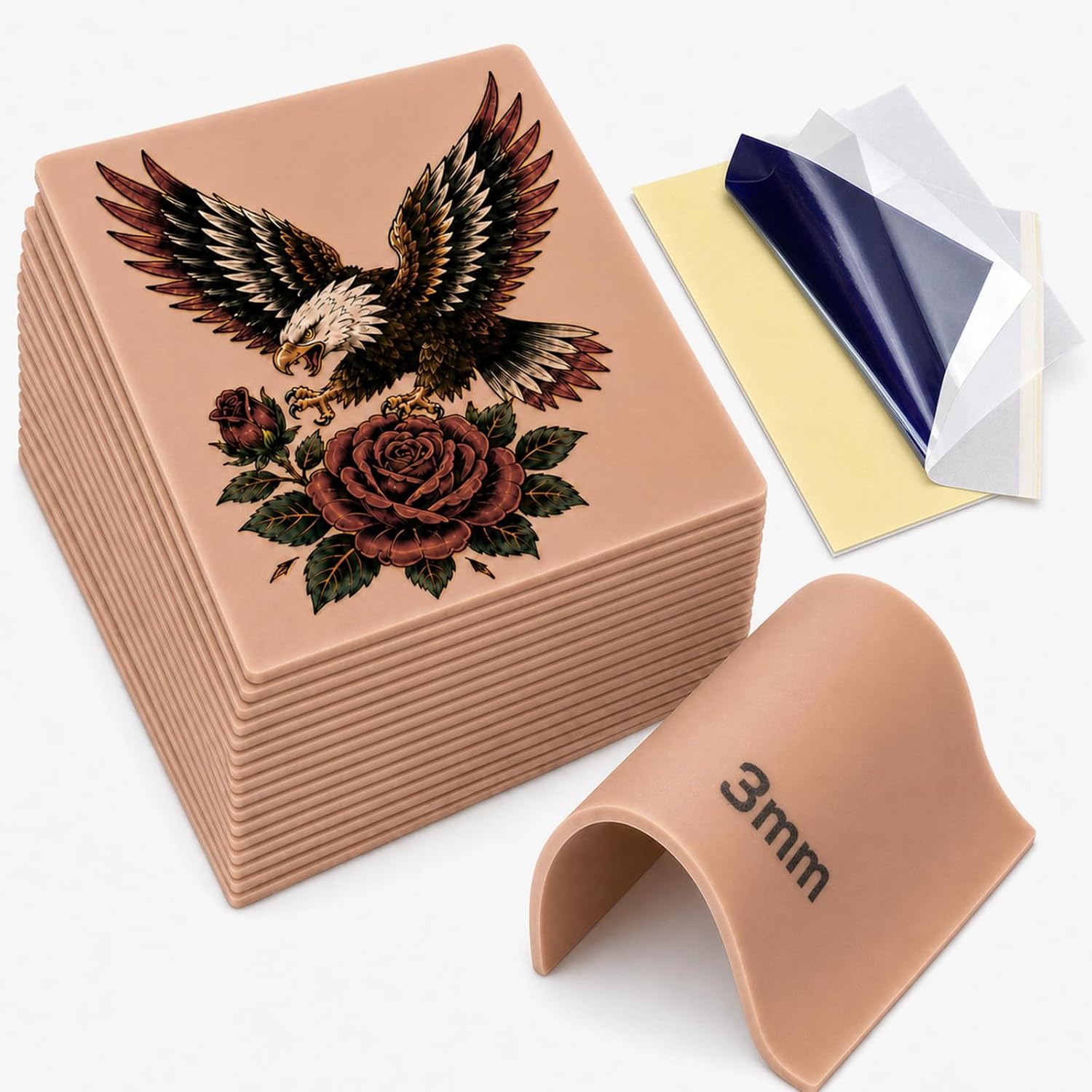
Practice skin is available in different thicknesses, including 1mm and 3mm options.
- 1mm tattoo practice skin: Thin and flexible, suitable for basic linework, stencil transfers, and simple designs.
- 3mm tattoo practice skin: Thicker and more substantial, providing a cushioned surface for linework, shading, and larger designs.
The best choice depends on your training goals and the material's properties. Thicker skin isn't automatically more realistic than thinner skin.
When Should You Use a Tattoo Practice Hand?
A tattoo practice hand is useful when you're ready to move beyond flat practice pads. Its three-dimensional shape allows you to practice designs around fingers, knuckles, and the back of the hand.
It's not essential for your first practice session, but it can help you become more comfortable with curved surfaces as your skills develop.
Conclusion
Learning how to practice tattooing takes time, patience, and hands-on experience. You don't need to master every technique at once. Start with simple exercises, focus on improving your control, and gradually challenge yourself with more detailed designs. With the right practice tools and guidance from experienced tattoo artists, you can build the skills and confidence needed to continue your tattooing journey.